Queens slipper
Back to all places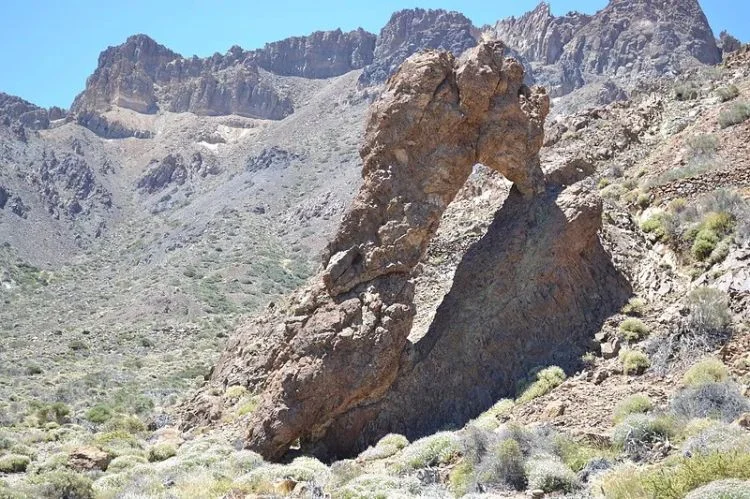
Queens slipper or la Zapata de la reina, shoe shaped rock formation in the national park of Las Canadas del Teide is UNESCO world heritage site. Looking in the opposite direction from the volcano, towards the edge of the caldera, you can see a rock in the shape of a high-heeled shoe formed as a result of erosion. AT the viewpoint you can find an interpretive table where the weather conditions are explained in the Teide and how it influences the landscape, over thousands of years, to form these curious shapes in the rocks. This natural stone monument is a clear example of the erosive phenomenon in which different types of agents related to atmospheric phenomena intervene such as: rain, heat, wind, snow, hail. The effects that it can cause on the relief can take very curious forms and this aspect is known under the name of weathering. These agents have a great impact on the different materials, which are fragmented or altered, so that the initial shapes are transformed in a long and imperturbable process. Those materials that are less resistant are more affected than those that are more hard, giving rise to suggestive figures. Metaphorically speaking, erosion would be like that sculptor who is never satisfied and is always making changes to his work. La Zapatilla de la Reina is a volcanic dam with a very hard structure that is highly eroded and has the shape of a shoe, like Cinderella, more than 100 meters high. Like any rock found in the open air, with the passage of time in thousands of years, it will change its current shape due to the continuous action of erosive agents, until it completely disappears. In addition, with the addition that the climatic conditions that occur in the Las Cañadas del Teide National Park are very extreme and accelerate this process. On Mount Teide the winds are very strong and the daily temperature can fluctuate by more than 20 degrees Celsius. And with the addition that in almost every winter snow and ice make an appearance, being powerful phenomena to shape the environment. On the other hand, the altitude above sea level in which it is found causes periglacial forms, which are caused by ice and thaw, typical of other places such as Norway and other Scandinavian countries. All this in a perfect symbiosis makes this place considered magical by many people who visit it, especially when walking in the light of the full moon.
28.21086, -16.65618