Pyramids of Güímar
Back to all places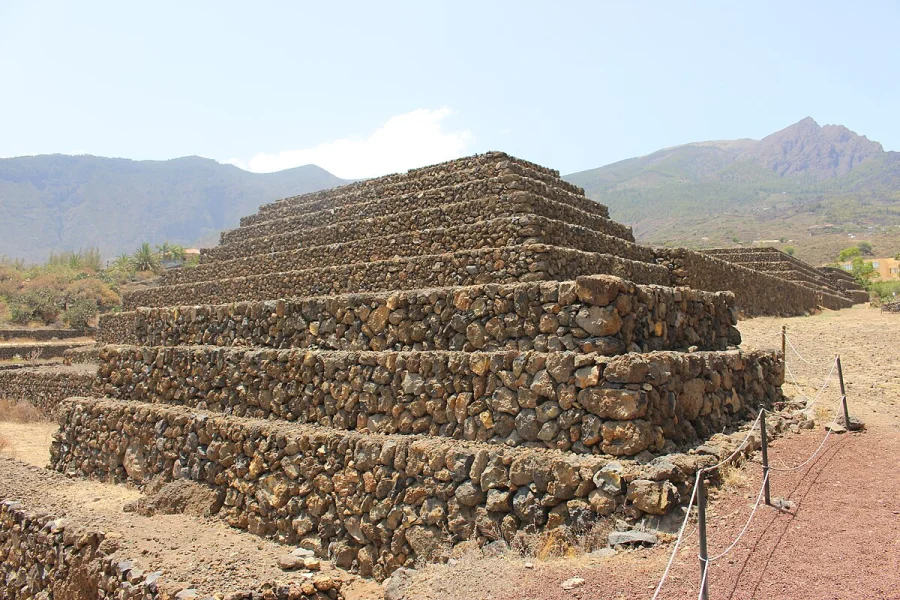
Pyramids of Güímar Ethnographic Park is built around the six stepped pyramids found in the region. The museum allows visitors to learn about other pyramids around the world and the ancient civilisations that built them. The boats used by these ancient cultures also have their space in the museum, thanks largely to the fact that the main figure behind this museum was the explorer Thor Heyerdahl, known for his maritime expeditions. The gardens in the park are another of its attractions: you can discover them on one of the many thematic walks available. And then there is the Poison Garden, which brings together more than 70 toxic plants from all over the world. At a closer look, each pyramid has a stairway to the top. Instead of pointed summits, the upper part of the monuments is flat and covered in gravel. The stairways are all on the western side, suggesting a ceremonial purpose. It is believed that someone ascending the pyramid in the morning would be welcoming the rising sun, a significant religious act. The location of the site also makes it look as if the sun is rising out of the water, which might have an added significance for a ceremony. These mysterious gems were also mentioned in the earlier writings during the Roman Empire. Roman philosopher Pliny the Elder, for instance, wrote about how the Canaries were completely uninhabited. For centuries, the origin of these pyramids remains obscure. Norwegian anthropologist and explorer Thor Heyerdahl has dedicated much of his life to researching the cultural origins of ancient civilizations throughout the world. He believed that the pyramids’ construction details resemble the architectural principles used in the Old and New Worlds. As such, he theorized that the Guanches might have built the pyramids long before the Spanish colonization. Furthermore, he suggests that there is a link between the seafaring people from Egypt and Central America.
28.32081, -16.41375