Paisaje Protegido de la Rambla de Castro
Back to all places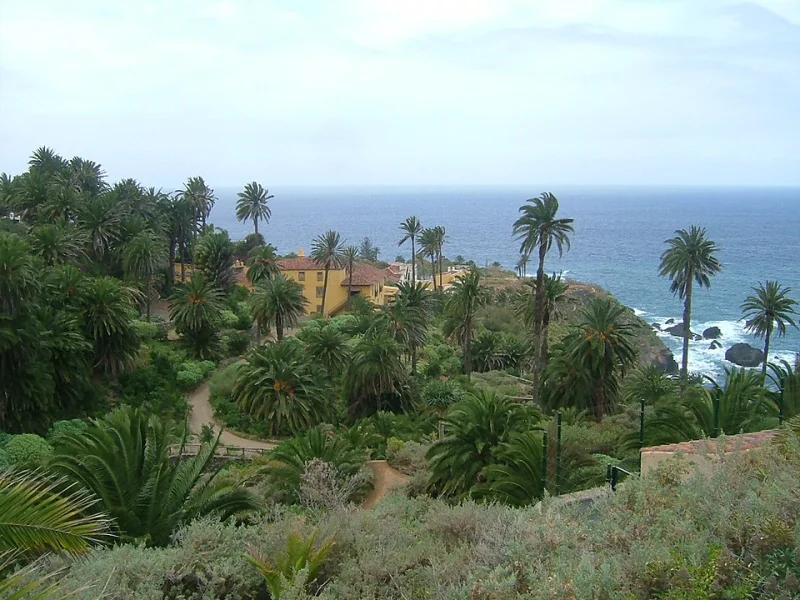
Nestled along the north coast of Tenerife, the Paisaje Protegido de la Rambla de Castro showcases a striking blend of dramatic cliffs, lush palm groves, and the wild Atlantic coastline. Spanning approximately 50 hectares, this protected landscape is renowned for its rich natural and historical heritage. The area is particularly distinguished by the Rambla de Castro itself, an ancient watercourse that once provided vital irrigation for the region’s prolific agricultural estates. The site is deeply tied to the history of the Castro family, who established the iconic Hacienda de los Castro in the early 17th century, around 1603. This stately manor house, partially conserved to this day, symbolises the area’s historical importance in the development of Tenerife’s sugar industry—a cornerstone of local economy from the 1500s onwards. Nearby, the 18th-century Fortín de San Fernando stands as a testament to the island’s efforts to fend off pirate raids, a persistent threat during the age of transatlantic trade. The landscape also encompasses the notable Ermita de San Pedro, a picturesque hermitage constructed in 1760, offering insight into the region’s religious and architectural traditions. Melancholy remnants of the 19th-century Elevador de Aguas de Gordejuela, an innovative water-lifting station built in 1903 to facilitate irrigation, highlight the technological advancements that shaped Tenerife’s agricultural success. Declared a Protected Landscape in 1994, this area is not only valued for its cultural and historical significance but also for its important biodiversity. The palm grove, home to the endemic Canary Island date palm, as well as dragon trees and a host of rare bird species, exemplifies the unique natural habitat endemic to the Macaronesian Islands. Across centuries, Paisaje Protegido de la Rambla de Castro has played a vital role in the agricultural development and social history of northern Tenerife, offering visitors evocative glimpses into the island’s colonial past and its ongoing efforts to safeguard a rare and beautiful environment.
28.39482, -16.59326