Los Menceyes
Back to all places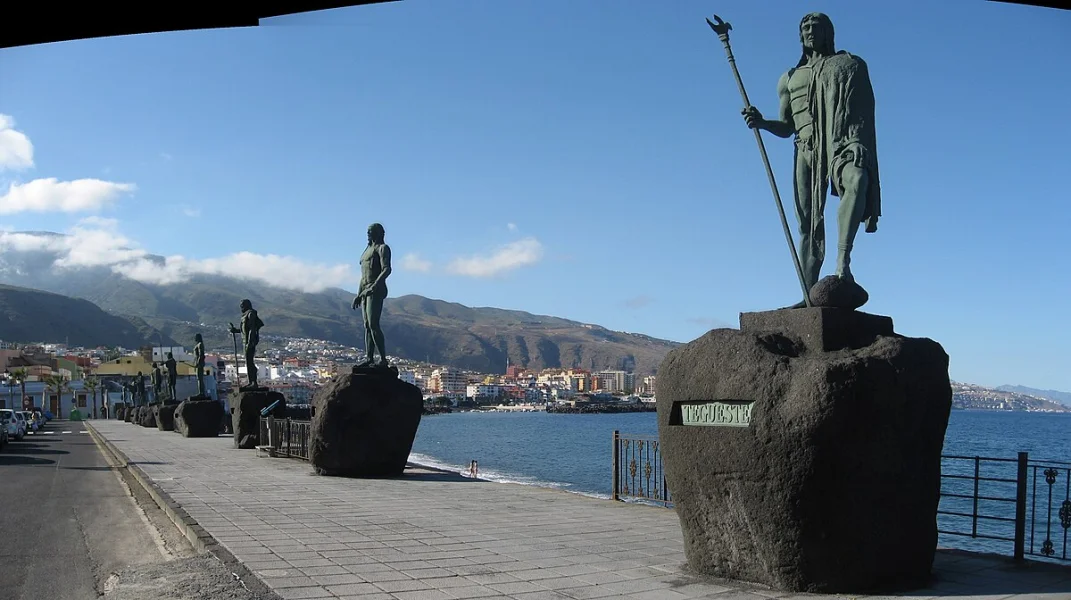
Tourists who get lost in Candelaria will definitely not miss taking pictures of themselves against the background of the statues by the square. It is about the kings, or mencey, who ruled the nine kingdoms of the Guanches who lived in Tenerife, who were killed or taken prisoner by respected religious leaders in wars of conquest. Half a millennium later, however, they have been cast in bronze, the current statues standing there in the year nineteen ninety-three, replacing the previous stone statues that were installed there in the year nineteen fifty-nine, standing with their backs to the ocean and facing their former home island, the ancestors of today’s inhabitants, the few survivors of which children and women sold into slavery. Fertilizer was ground from the mummies of their ancestors, kept in a corner of the cave for centuries. Destroying everything the sword touched so that they could deny they ever existed. And not a single nerve moves in those bronzed faces. The Guanches, tall, robust and strong men, came from the Berber or Amazigh peoples of North Africa and were conquered by the Spanish in 1496. They generally lived in caves taking advantage of the formations that nature offered them. They were dedicated to grazing goats and sheep and complemented their economy with agriculture and gathering. They practiced shellfishing and, to a lesser extent, fishing. The ancient settlers worked the clay by hand, since they were unaware of the potter’s wheel. However, there is evidence of its high quality. Dressed in skins, they made their own tools and wooden sticks, as a symbol of the hierarchy they held. But only the chiefs or menceyes could carry this baton. This fact was verified during the conquest of the island, when the Castilians observed the nine territorial demarcations or menceyatos of the island: Anaga, Tegueste, Tacoronte, Taoro, Icode, Daute, Adeje, Abona and Güímar.
28.35179, -16.36940