Garachico
Back to all places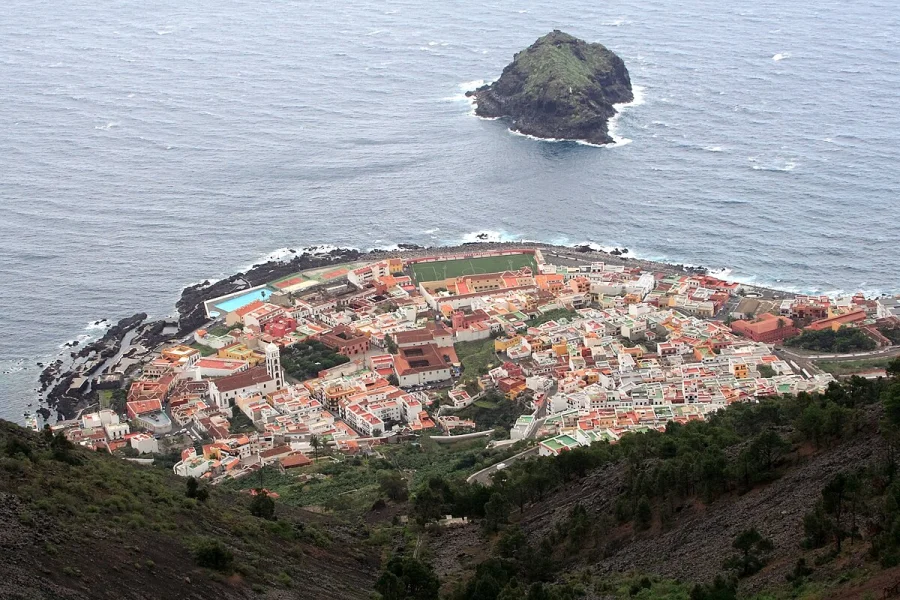
Garachico, nestled on the northwestern coast of Tenerife in the Canary Islands, is a town steeped in rich history and cultural significance. Founded towards the end of the 15th century by Cristóbal de Ponte, a Genoese banker, Garachico rapidly rose to prominence as one of Tenerife’s principal ports, acting as a vital gateway for trade between Europe and the Americas throughout the 16th and 17th centuries. The town’s period of prosperity was abruptly interrupted on 5 May 1706, when the eruption of the Trevejo volcano unleashed devastating lava flows, burying much of the port and altering the coastline permanently. Despite this catastrophe, the local populace rebuilt Garachico, and the town retains much of its original layout, characterised by cobbled streets and traditional Canarian architecture. Garachico is also home to significant historical landmarks such as the robust Castillo de San Miguel, erected in the late 16th century to defend the settlement from pirate attacks, and the Convento de San Francisco, dating back to 1524. The Iglesia de Santa Ana, rebuilt after the volcanic eruption, stands as a testament to the town’s resilience. Over the centuries, Garachico has played host to illustrious visitors, including explorer Alexander von Humboldt in 1799. Today, the annual Romería de San Roque festival and the town’s unique natural rock pools, formed by volcanic activity, draw visitors keen to experience Garachico’s fascinating blend of history and natural beauty. Designated a Historic-Artistic Site in 1994, Garachico stands as a living record of resilience, seismic transformation, and enduring heritage in the Canary archipelago.
28.37341, -16.76412